
Turkish Language Course Visa
We provide professional education consulting services for the Turkish language course visa program.
Our Video About Turkish Language Course Visa
What Is the Turkish Language Course Visa?
The Turkish Language Course Visa is a sub-type of the Turkish education visa (Eğitim Vizesi) issued by Turkish consulates and embassies abroad. It allows foreign nationals to enter Turkey for the specific purpose of attending a language program at an accredited Turkish language school or university language center, typically TÖMER (Türkçe Öğretim Merkezi) and equivalent institutions such as Yunus Emre Institute, Istanbul University DİLMER, Ankara University TÖMER, Marmara University TÖMER, Yıldız Technical University TÖMER, and a range of private licensed language schools across the country.
The visa is not the same as a tourist visa or e-visa. Many countries can enter Turkey on an e-visa for short stays, but anyone planning to study Turkish for a course longer than 90 days, or anyone who plans to obtain a residence permit during their studies, must enter Turkey with a proper Turkish Language Course Visa stamped in their passport by a Turkish consulate. Coming in on a tourist visa and then trying to switch to a student status from inside Turkey is, in nearly all cases, not possible. The student status begins with the consulate-issued visa.
Who Needs It
You need a Turkish Language Course Visa if:
- You are a non-Turkish citizen.
- You plan to take a Turkish language course in Turkey for longer than 90 days.
- You want to apply for a Turkish Language Course Residence Permit after arrival.
- Your nationality requires a visa to enter Turkey for stays longer than 90 days regardless of e-visa eligibility.
You may not need it if you already hold a long-term Turkish residence permit or a Turkish citizenship-eligible status. In all other cases, the language course visa is the standard entry route.
Who Issues It
Turkish Language Course Visas are issued by Turkish embassies and consulates abroad, not from inside Turkey. The application is filed in your country of residence or in the country where you legally reside. The decision is made by the consular section based on your documents, the invitation letter from your Turkish language school, your financial proof, and the consular interview where required.
Why Study Turkish in Turkey?
Studying Turkish anywhere else in the world will teach you the grammar and the vocabulary. Studying Turkish in Turkey teaches you the language as it is actually spoken, in the country where every street sign, every menu, every conversation reinforces what you learn in class.
Full Cultural Immersion
You hear Turkish from the moment you land. Your taxi driver, your landlord, your barista, your neighbor, your classmates in coffee breaks. Six months of part-time online lessons abroad is no match for six weeks of full immersion in Istanbul or Ankara.
Native Environment
Turkish has regional accents, common idioms, slang, and conversational shortcuts that textbooks rarely teach. Living in Turkey while you study exposes you to the real spoken language alongside the formal grammar.
Affordable Education
Compared to studying a second language in Western Europe or North America, Turkey is significantly more affordable. Turkish language course fees, accommodation, food, and transport all cost a fraction of what an equivalent program would cost in Berlin, London, or New York.
International Student Experience
Turkish language schools attract students from every continent. You will share classrooms with students from Central Asia, the Middle East, Africa, Europe, and the Americas. The friendships and professional networks built during this period are often as valuable as the language certificate itself.
Career and Academic Opportunities
Turkish is a strategic language. Turkey is a major manufacturing hub, an EU customs union partner, a NATO member, a regional power, and a growing destination for international investment, healthcare, and tourism. Speaking Turkish opens doors in business, diplomacy, journalism, NGO work, and academia.
Turkish Universities and Language Centers
Turkey has invested heavily in higher education. Most major Turkish universities operate a TÖMER or equivalent language center: Istanbul University DİLMER, Ankara University TÖMER, Marmara University TÖMER, Yıldız Technical University TÖMER, Boğaziçi University, Middle East Technical University, Hacettepe University, Ege University, Bilkent University, and many others. The Yunus Emre Institute, the official cultural institute of the Republic of Turkey, also offers internationally recognized Turkish courses.
Why Choose Turkish Council
Turkish Council is Turkey’s leading culture and education institution for international students. We specialize in Turkish Language Course Visa programs, residence permit applications, university admissions, and education consulting for foreigners moving to Turkey. We work with partners in over 40 countries and our students come from every continent.
What students consistently tell us they value:
- More than 5 years of focused experience in Turkish education consulting and immigration services. This is what we do every day.
- Official invitation letters from accredited Turkish language schools and TÖMER centers, in the exact format required by Turkish consulates.
- Full visa application support from document checklist to consulate appointment preparation, in your language.
- Multi-language consultancy in English, French, Russian, Arabic, Turkish, Chinese, Spanish, German, Hindi, and Urdu.
- Residence permit handling after arrival, through our dedicated immigration partner, so you do not have to navigate the Turkish e-randevu system on your own.
- University admission pathway if you decide to continue from Turkish language studies into a full degree at a Turkish university. Our partner Turquoise Education handles both public and private university admissions.
- Career services included, with workshops on CV writing, cover letters, interview skills, and target companies for students who want to work in Turkey after completing their Turkish studies.
- One business-day response from our education consultants on every inquiry.
- Office in Istanbul at Şişli Merkez Mahallesi Hasat Sokak No: 12A, with the full team accessible to clients in person and online.
We are not a generic agency. We are a specialized education consultancy for students who choose to learn Turkish in Turkey, and our service is designed around that single goal.
Turkish Language Course Visa Requirements
Turkish consulates apply a consistent set of requirements for the Turkish Language Course Visa, with some variation by country and by consulate. The following items make up the standard application file.
1. Valid Passport
Your passport must be valid for at least 6 months beyond your planned date of entry to Turkey, with at least two blank pages for the visa sticker. Damaged or expiring passports must be renewed before application.
2. Acceptance Letter from a Turkish Language School (Invitation Letter)
This is the document that triggers the entire application. The letter must come from an accredited Turkish language school, TÖMER, or university language center, and must include:
- Your full legal name as it appears on your passport.
- Your nationality and passport number.
- The school’s full name, address, accreditation, and contact details.
- The exact course name, level, start date, end date, and total hours.
- Confirmation of fee payment or fee schedule.
- The school’s official seal and authorized signature.
Turkish Council issues these invitation letters from our partner schools as part of our standard enrollment package.
3. Proof of Financial Means
Consulates need to see that you can support yourself in Turkey for the duration of your studies. Standard evidence includes:
- Bank statements from the last 3 to 6 months showing a healthy balance.
- A sponsor letter and the sponsor’s bank statements, if your parents or another family member is paying.
- Scholarship award letters, if applicable.
There is no published statutory minimum amount, but practical experience suggests showing access to roughly USD 500 to 800 per month for the planned stay is a reasonable benchmark for most consulates. Higher amounts are generally better.
4. Health Insurance
Turkish residence permit regulations require valid health insurance covering your stay in Turkey. For the visa application stage, many consulates accept travel insurance covering the initial entry period; for the residence permit application after arrival, you will need a Turkish private health insurance policy that meets the SGK-equivalent coverage requirements.
5. Visa Application Form
The completed and signed Turkish visa application form, in the format provided by your local Turkish consulate. Forms are usually downloadable from the consulate’s website or available at the visa center.
6. Biometric Passport Photo
Recent biometric-standard photographs (usually 5×6 cm, white background, neutral expression). Some consulates require two; others require one. Check your specific consulate’s requirements.
7. Accommodation Proof
Evidence of where you will stay in Turkey, typically:
- A rental contract or accommodation reservation.
- A hotel booking covering the initial weeks.
- A confirmation letter from your language school if dormitory accommodation is included.
- A host letter if you will stay with a family member or friend in Turkey, with a copy of their Turkish ID or residence permit.
8. Additional Embassy-Specific Requirements
Depending on your country of nationality and residence, the consulate may request:
- Police clearance certificate / criminal background check.
- Educational diplomas and transcripts.
- Letter explaining your motivation for studying Turkish.
- CV / resume.
- Proof of ties to your home country.
- Travel itinerary or flight reservation.
- Visa fee payment receipt.
Always confirm the current list with the consulate before submitting. Turkish Council reviews your specific consulate’s requirements at the start of every engagement.
Step-by-Step Application Process
Here is exactly how the process works from the first inquiry to your arrival in Turkey, with realistic timelines for each stage.
Step 1. Choose a Turkish Language School
Timeline: 1 to 2 weeks
Decide which city you want to study in, what level you want to start at (A1 through C1), and the program length (short-term intensive, semester, or full-year). Turkish Council helps shortlist schools based on your goals, location preferences, and budget.
Step 2. Receive the Acceptance/Invitation Letter
Timeline: 5 to 10 working days after enrollment
Once you confirm your school and pay the enrollment deposit, the school issues an official acceptance letter on its letterhead, stamped and signed. Turkish Council coordinates this with our partner schools and delivers the original letter (and a scanned copy) to you.
Step 3. Prepare Your Document File
Timeline: 1 to 3 weeks
Gather and prepare every document on the requirements checklist. We send a customized checklist for your nationality and consulate, review your draft documents, and flag missing or inconsistent items before you book your visa appointment. Bank statements, sponsor letters, and translations are particularly worth double-checking at this stage.
Step 4. Book the Visa Appointment
Timeline: depends on consulate; 1 to 8 weeks lead time
Visa appointments at Turkish consulates are booked online through the consulate’s appointment system or via the official visa service provider (such as iDATA in some countries). Appointment availability varies widely. Major consulates in countries with high application volume (India, Pakistan, Nigeria, Egypt, Iran, Russia) may have longer wait times. Book as early as possible.
Step 5. Submit Your Application at the Consulate
Timeline: 1 day
Attend the appointment in person at the Turkish consulate or visa application center. Bring the full document file (originals and copies), pay the visa fee, provide biometric data if requested, and answer any consular interview questions about your purpose, course, and finances.
Step 6. Visa Processing and Decision
Timeline: 2 to 8 weeks
Processing time varies significantly by consulate and time of year. Standard processing is 2 to 4 weeks; busier periods and consulates that conduct additional background checks can extend this to 6 to 8 weeks. Once approved, the visa is stamped into your passport, and you receive your passport back.
Step 7. Travel to Turkey
Timeline: at your discretion within visa validity
Book your flight to your destination city. On arrival, your passport will be stamped by Turkish border police; carry your school acceptance letter and proof of accommodation in case the border officer asks.
Step 8. Apply for the Turkish Language Course Residence Permit
Timeline: within the first 30 days after arrival
Once in Turkey, you must apply for the Turkish Language Course Residence Permit (Eğitim Amaçlı İkamet İzni) with the Provincial Directorate of Migration Management (Göç İdaresi). This is done through the e-randevu online appointment system. Turkish Council and our immigration partners handle this entire process for you, including online form completion, document collation, fee payment, and accompanying you to the appointment if needed.
Total realistic timeline from first inquiry to residence permit in hand: 2 to 4 months. Starting at least 3 months before your intended Turkey arrival date is strongly recommended.
Required Documents for a Turkish Language Course Visa
The documents required for a Turkish language course visa may vary depending on the applicant’s nationality, the Turkish consulate, and whether the applicant also needs a residence permit after arriving in Turkey. The table below summarizes the most common documents requested during the visa and residence permit process.| Document | Required For | Notes |
|---|---|---|
| Valid passport | Visa and residence permit | Passport should usually have at least 6 months of validity remaining and at least 2 blank pages. |
| Acceptance letter from Turkish language school | Visa and residence permit | Shows the purpose of stay. The letter should be issued by the Turkish language course provider. |
| Biometric photos | Visa and residence permit | Usually 4 to 6 photos may be needed across both stages, depending on the consulate and residence permit office. |
| Visa application form | Visa | Completed through the relevant Turkish visa application system or provided by the Turkish consulate. |
| Proof of financial means | Visa and residence permit | Bank statements from the last 3 to 6 months are commonly requested. |
| Sponsor letter and sponsor’s bank statements | If a third party is paying | May need to be translated, notarized, or legalized depending on the consulate’s requirements. |
| Health insurance | Visa and residence permit | Private health insurance valid in Turkey is commonly required for the residence permit stage. |
| Accommodation proof | Visa and residence permit | May include a rental contract, hotel booking, dormitory confirmation, or host letter. |
| Visa fee payment receipt | Visa | The amount varies depending on nationality and consulate procedure. |
| Residence permit fee receipt | Residence permit | Usually paid online or through a Turkish tax office after the residence permit application is created. |
| Address registration | Residence permit | After moving into accommodation in Turkey, the address may need to be registered with the relevant authority. |
| Tax ID number | Residence permit | A Turkish tax number may be required for fee payment, insurance, and residence permit procedures. |
| Police clearance certificate | If requested by consulate | This is country-specific and not always required. |
| Educational diplomas | If requested by consulate | May need translation, notarization, or apostille depending on the consulate. |
| Motivation letter | If requested by consulate | Should clearly explain why the applicant wants to study Turkish in Turkey. |
| Travel itinerary | Optional but helpful | A flight reservation may be enough; a purchased ticket is not always required before visa approval. |
Residence Permit Information
The Turkish Language Course Residence Permit is the legal authorization to stay in Turkey for the duration of your language studies. The visa lets you enter; the residence permit lets you stay.
Validity Period
The residence permit for language course students is typically issued for a period matching the course duration, commonly 6 months to 1 year per issuance. For language education specifically, the total period of language-course-based residence permits is generally capped at 2 years. After that, students are expected to either continue into a university program (and switch to a full student residence permit) or transition to another residence permit category.
Renewal
Permits can be renewed before expiry by demonstrating continued enrollment in the language school, ongoing accommodation, valid health insurance, and updated financial proof. Renewals are filed with the Provincial Directorate of Migration Management. Apply at least 60 days before expiry.
Application Process After Arrival
- Within 30 days of entry to Turkey, file the residence permit application online through the e-randevu system.
- Pay the residence permit fee and card fee at a Turkish tax office or online.
- Receive an appointment date with the Provincial Directorate of Migration Management.
- Attend the appointment with the full document file. Some appointments are document-only (no in-person interview); others require attendance.
- Receive your residence permit card by registered mail to your registered Turkish address.
The whole process typically takes 4 to 10 weeks from application to card delivery, depending on the province and the season.
Cost of a Turkish Language Course Visa and Residence Permit
Costs vary by nationality, course length, city, and individual choices. The following ranges reflect typical 2026 numbers for budgeting purposes. Turkish Council provides a written, all-in quote before you commit to any program.
Visa Fees
The Turkish Language Course Visa fee depends on your nationality, ranging from approximately USD 30 to USD 250. Reciprocity rules apply: some countries pay more, some pay less. Some nationalities are exempt.
Language Course Costs
Turkish language course fees vary by school, intensity, and city. As a guide:
- TÖMER (university language centers): approximately USD 800 to USD 2,000 per level for an intensive program (each level typically 8 to 10 weeks).
- Private licensed schools: approximately USD 600 to USD 1,800 per level.
- A full A1 to C1 path (six levels) typically falls in the USD 4,000 to USD 9,000 range depending on the school.
Health Insurance
Turkish private health insurance for residence permit purposes costs approximately USD 100 to USD 400 per year depending on age, coverage level, and insurer. Coverage must meet the minimum requirements set by the Migration Directorate.
Residence Permit Fees
Residence permit application fees and card fees together typically cost USD 80 to USD 250 per issuance for a 1-year permit, depending on nationality.
Living Costs in Turkey
Monthly living costs depend heavily on the city and lifestyle:
- Istanbul: approximately USD 600 to USD 1,200 per month for rent (shared apartment), utilities, food, transport, and basic leisure.
- Ankara, Izmir: approximately USD 450 to USD 900 per month.
- Antalya: approximately USD 500 to USD 1,000 per month, with seasonal variation.
- Smaller cities (Bursa, Konya, Eskişehir, Gaziantep): approximately USD 350 to USD 700 per month.
Public transport in Turkish cities is excellent and inexpensive. Student transport cards offer discounted fares.
Best Cities to Learn Turkish in Turkey
You can study Turkish across the country, but four cities concentrate the strongest combination of high-quality language schools, international student infrastructure, and quality of life.
Istanbul
By far the most popular city for international students. Istanbul offers the widest selection of language schools, TÖMER centers, and university language programs. The city is genuinely bilingual on the international side, so the Turkish learning environment is also the most demanding (because English and other languages are widely available, students need discipline to push themselves into Turkish). Cultural richness, transport infrastructure, and the international community make Istanbul the default choice for most foreign students. Turkish Council’s main office is located in Şişli, Istanbul, and most of our students start here.
Ankara
The Turkish capital and the birthplace of TÖMER (Ankara University TÖMER, founded in 1984, is the original Turkish-as-a-foreign-language teaching center). Ankara offers a more academic, more local-Turkish-speaking environment than Istanbul. The diplomatic community gives the city a strong international student infrastructure without the size and cost of Istanbul. Excellent for serious language learners.
Izmir
The Aegean coast city, generally considered the most relaxed and Western-feeling of Turkey’s major cities. Strong weather, beautiful coastline, lower cost of living than Istanbul, and respected university language centers. Popular with European students.
Antalya
The Mediterranean coast city, famous for its beaches, mild winters, and large international tourist population. Antalya has a smaller but growing Turkish language school scene and is particularly popular with students who want to combine studies with a lifestyle move.
Other Cities Worth Considering
Bursa (close to Istanbul, cheaper, more traditional), Konya (deeply traditional, very Turkish-speaking environment, excellent for full immersion), Eskişehir (university town with active student life), and Gaziantep (rapidly growing, southern Turkey, lower cost of living).
Common Reasons Turkish Language Course Visas Are Rejected
Rejection rates vary by consulate and nationality, but most rejections come from a small set of recurring issues. Knowing what consular officers look for is half the battle.
1. Missing or inconsistent documents. The acceptance letter has a name spelling different from the passport. The bank statement does not cover the requested months. The accommodation letter is dated after the application date. Small inconsistencies are red flags. Turkish Council reviews every document for consistency before submission.
2. Weak financial proof. A bank balance that just barely covers one month of living costs is not enough. Consulates want to see clear evidence that you can sustain yourself for the full course period. Sponsor letters from family members are accepted, but the sponsor’s own bank statements must be strong.
3. Inconsistent or unclear study purpose. A motivation letter that does not match your background, a language course choice that does not fit your stated career goals, or a course duration that does not match the visa duration requested. Consulates look for coherence.
4. Unrecognized or low-credibility language school. The acceptance letter must come from a school that the consulate recognizes. Letters from unaccredited or “ghost” schools are an immediate rejection. Turkish Council only works with accredited Turkish language schools and university TÖMER centers.
5. Incomplete or incorrect paperwork. Application form fields left blank, photos not meeting biometric standards, signatures missing, fees not paid. These mistakes are entirely avoidable with a good pre-submission review.
6. Prior immigration history concerns. A history of Schengen rejections, overstays in any country, or visa cancellations can affect the decision. Address this honestly in your file with explanations and supporting documents.
7. Lack of ties to your home country (for higher-risk profiles). For some nationalities and individual profiles, consulates want to see ties to your home country (property, family, employment) that make your return after studies plausible.
8. Submitting too late. Last-minute applications give consulates no flexibility. Start at least 3 months before your intended Turkey arrival.
How Turkish Council Helps Students
Our service is built around removing the operational, administrative, and cultural friction that prevents most international students from ever actually moving to Turkey. We do not give advice and disappear. We work the file with you.
School Selection
We match you to the right school based on your level, target city, course length, and budget. We are not committed to one school. We work with multiple accredited Turkish language schools, TÖMER centers, and university language programs across Istanbul, Ankara, Izmir, and Antalya.
Visa Application Assistance
We send you the complete document checklist tailored to your nationality and consulate. We review every document before submission. We coordinate the acceptance letter from your school. We help you prepare for the consulate appointment, including likely interview questions.
Translation Support
We coordinate certified translations of documents into Turkish (or other languages) where required. We work with accredited translators familiar with consulate and Migration Directorate standards.
Residence Permit Handling
After your arrival in Turkey, we and our immigration partner handle the full residence permit application: online appointment, fee payments, document submission, and the Migration Directorate appointment. You are not left alone with the e-randevu system in Turkish.
Student Counseling
We answer your day-to-day questions: how to open a Turkish bank account, how to register your address, how to get a Turkish phone number, how to navigate the e-Devlet system, how to find a doctor. The first two months in Turkey have a steep learning curve, and we shorten it.
Airport Pickup and Accommodation Support
We coordinate airport pickup, initial accommodation in approved student housing or apartments, and introductions to landlords and dormitories. Premium and standard packages are available.
University Pathway Support
If you decide to continue from Turkish language studies into a Turkish university degree, our partner Turquoise Education handles the university application and admission process for both public and private universities. Many of our students complete their language studies and continue into engineering, medicine, business, computer science, dentistry, and other programs.
Career Services
For students planning to stay and work in Turkey after their language studies, we offer career workshops on CV writing, cover letters, interview skills, target company strategy, and Turkish workplace culture.
Frequently Asked Questions
1. How can I get a Turkish Language Course Visa?
Get an official acceptance letter from a recognized Turkish language school, prepare the document file (passport, financial proof, health insurance, accommodation proof, photos), book an appointment at your local Turkish consulate, attend the appointment, and wait for the decision. Turkish Council handles every step except the appointment itself, where you must attend in person.
2. How long does the Turkish Language Course Visa process take?
From first inquiry to visa approval typically takes 6 to 12 weeks. Document preparation: 1 to 3 weeks. Consulate appointment availability: 1 to 8 weeks depending on country. Visa processing: 2 to 8 weeks. Start at least 3 months before your intended Turkey arrival.
3. Can foreigners learn Turkish in Turkey?
Yes. Turkey actively welcomes international students. Accredited Turkish language schools, TÖMER centers, and university language programs across the country accept foreign students of every nationality. The Turkish Language Course Visa is the legal entry route.
4. Can I work with a Turkish Language Course Visa?
No, not directly. The Turkish Language Course Visa and the associated student residence permit are for study only. To work in Turkey legally, you need a work permit (Çalışma İzni), which is a separate application. Some students transition to work permits later, but you cannot work on the language student visa alone.
5. How much money do I need to study Turkish in Turkey?
Budget realistically for USD 7,000 to USD 14,000 for a full year, including course fees, accommodation, food, transport, health insurance, visa and residence permit fees. Costs are lower in cities outside Istanbul. Turkish Council provides a detailed written budget based on your chosen city and school.
6. Is a Turkish residence permit required for language students?
Yes, for any stay longer than 90 days within a 180-day window. The residence permit is the legal authorization to remain in Turkey for the duration of your language course. Apply within 30 days of arrival.
7. Which Turkish language schools are best?
Strong, widely recognized options include Ankara University TÖMER (the original), Istanbul University DİLMER, Marmara University TÖMER, Yıldız Technical University TÖMER, Boğaziçi University, Yunus Emre Institute, and a range of accredited private schools. Turkish Council recommends a school based on your level, city, budget, and learning style after reviewing your goals.
8. Can the Turkish Language Course Visa be extended?
The visa itself is a single-entry or multiple-entry document that authorizes your entry to Turkey. After entering, your legal status is governed by the residence permit, which is renewable. Total time on language-course-based residence permits is generally capped at 2 years; after that, students typically transition to a university student permit or a different category.
9. Can I convert the Turkish Language Course Visa to a university student visa later?
Yes, indirectly. After completing your Turkish language course and being admitted to a Turkish university, you switch from a language course residence permit to a full Student Residence Permit (Öğrenci İkamet İzni) based on university enrollment. Many of our students follow this exact pathway: language studies first, then a full degree.
10. Do I need to speak Turkish before I apply for the visa?
No. Most language students start at A1 (absolute beginner) level. The whole purpose of the visa is to learn Turkish in Turkey. Schools teach in Turkish using direct methods, but the administrative side can be handled in English (or your home language with Turkish Council’s support).
11. Can I bring my family with me on the Turkish Language Course Visa?
The Turkish Language Course Visa is issued to you personally. Spouses and dependent children can apply for accompanying family residence permits in Turkey under certain conditions, but this is a separate process. Talk to us early if you plan to relocate with family.
12. Is health insurance mandatory?
Yes, for both visa application (entry insurance covering the initial period) and residence permit (Turkish private health insurance covering at least the basic SGK-equivalent package). Turkish Council coordinates insurance through partner providers.
13. What happens if my visa application is rejected?
You can apply again with a stronger file once the reasons for the rejection are addressed. Common rejections are based on incomplete documents, weak financial proof, or unrecognized schools, all of which Turkish Council prevents through pre-submission review. In some cases, an administrative appeal or reapplication after a waiting period is the right strategy.
14. Do I have to study at a Turkish university to get this visa?
No. The Turkish Language Course Visa is specifically for language students, not full university students. You can study at a private licensed language school, a TÖMER center, a university language program, or the Yunus Emre Institute. Each can issue an acceptance letter that supports the visa application.
15. Can I open a Turkish bank account on this visa?
Yes, after you receive your residence permit. The residence permit gives you a Turkish ID number, which is the basis for opening a bank account, registering for utilities, signing a long-term rental contract, and using the e-Devlet government portal.
16. Do I need to take a Turkish proficiency test before applying?
No. Almost all students start at A1 (absolute beginner). No prior Turkish is required. After completing levels A1 through C1, students typically have a certificate that is recognized by Turkish universities (often combined with a separate proficiency test such as TR-YÖS or university-specific exams).
17. Can I study Turkish online before going to Turkey?
Yes, and we recommend it. Turkish Council operates a dedicated online A1 course that gives you the basics before you arrive. The course is also useful preparation for the visa application: it shows your serious intent to learn Turkish and helps you arrive in Turkey ready to start.
18. Will the Turkish Language Course Visa let me travel within the Schengen Area?
No. Turkey is not part of the Schengen Area. A Turkish visa lets you enter Turkey only. For Schengen Area travel, you need a separate Schengen visa from one of the Schengen member states.
19. Do I need to translate my documents into Turkish?
For the visa application, documents in English are typically accepted at most consulates. For the residence permit application after arrival in Turkey, some documents may need to be officially translated into Turkish and notarized. Turkish Council coordinates certified translations as part of the service.
20. Can I work part-time as a student in Turkey?
Foreign students in Turkey generally need a separate work permit to work legally, even part-time. Some categories of full degree students have limited part-time work rights through specific procedures, but language course students typically do not. Do not plan on income from part-time work in Turkey unless you have a confirmed legal status.
21. What is the difference between a Turkish e-visa and a Turkish Language Course Visa?
The Turkish e-visa is an online tourist authorization for short stays, typically up to 30 to 90 days. It cannot be used as the basis for a language course residence permit. The Turkish Language Course Visa is a separate, in-passport sticker visa specifically for educational purposes, issued by a consulate, and serves as the foundation for the residence permit.
22. Can Turkish Council help me find accommodation?
Yes. We coordinate student housing, shared apartments, dormitories, and short-term rentals through partners in each of the major student cities. Premium and standard accommodation packages are available, and we can arrange airport pickup on arrival.
23. Does Turkish Council also help with university applications after the language course?
Yes. Many of our language course students continue into Turkish universities. Our partner Turquoise Education handles applications to both public and private universities, including YÖS exam preparation, application strategy, document preparation, and admission liaison.
24. Where is Turkish Council based?
Our main office is located at Şişli Merkez Mahallesi Hasat Sokak No: 12A, Şişli, 34334, Istanbul, Turkey. We serve students worldwide through online consultation in 10+ languages and we welcome students to visit the office once they arrive in Istanbul.
25. How do I start the process with Turkish Council?
Contact us. We respond within one business day. The initial consultation is free, and we provide a written quote covering the school, the visa support, the residence permit, and any optional services (translation, accommodation, airport pickup) before you commit.
Talk to Turkey’s Leading Education Consultant
If you are ready to study Turkish in Turkey, Turkish Council can help you from the first email through to your residence permit card. We offer:
- A free initial consultation with one of our education consultants
- A written quote covering the school, the visa support, the residence permit, insurance, accommodation, and any optional services
- An official invitation letter from a partner Turkish language school
- Multi-language support in English, French, Russian, Arabic, Turkish, Chinese, Spanish, German, Hindi, and Urdu
- A response within one business day from our team
Contact Turkish Council today to start your Turkish Language Course Visa application.
Address: Şişli Merkez Mahallesi Hasat Sokak No: 12A, Şişli, 34334, Istanbul, Turkey Phone: +90 532 431 80 50 Website: www.turkishcouncil.org
Turkey’s leading culture and education institution. Partners in more than 40 countries. More than 5 years of focused experience in Turkish education and immigration consulting.
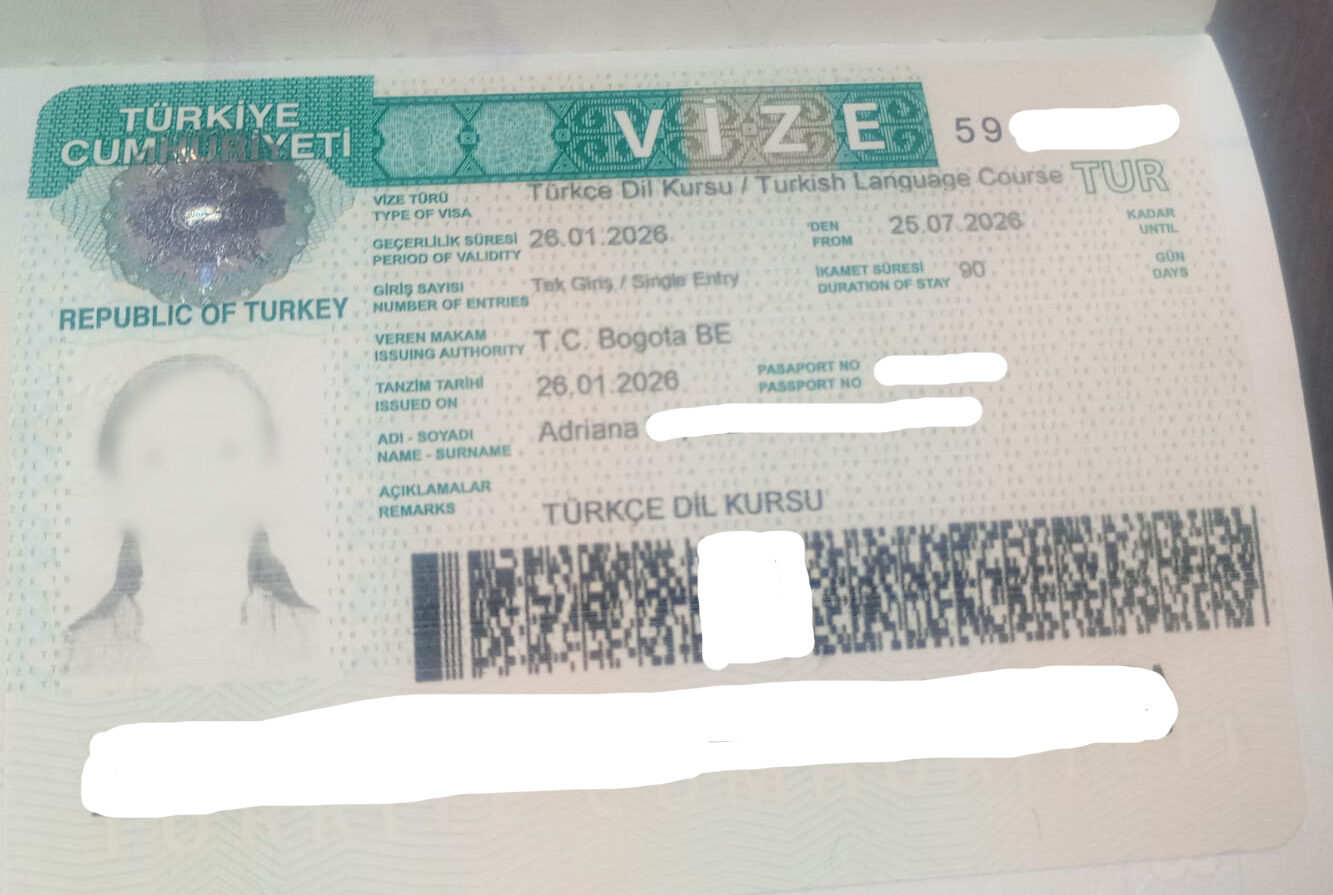
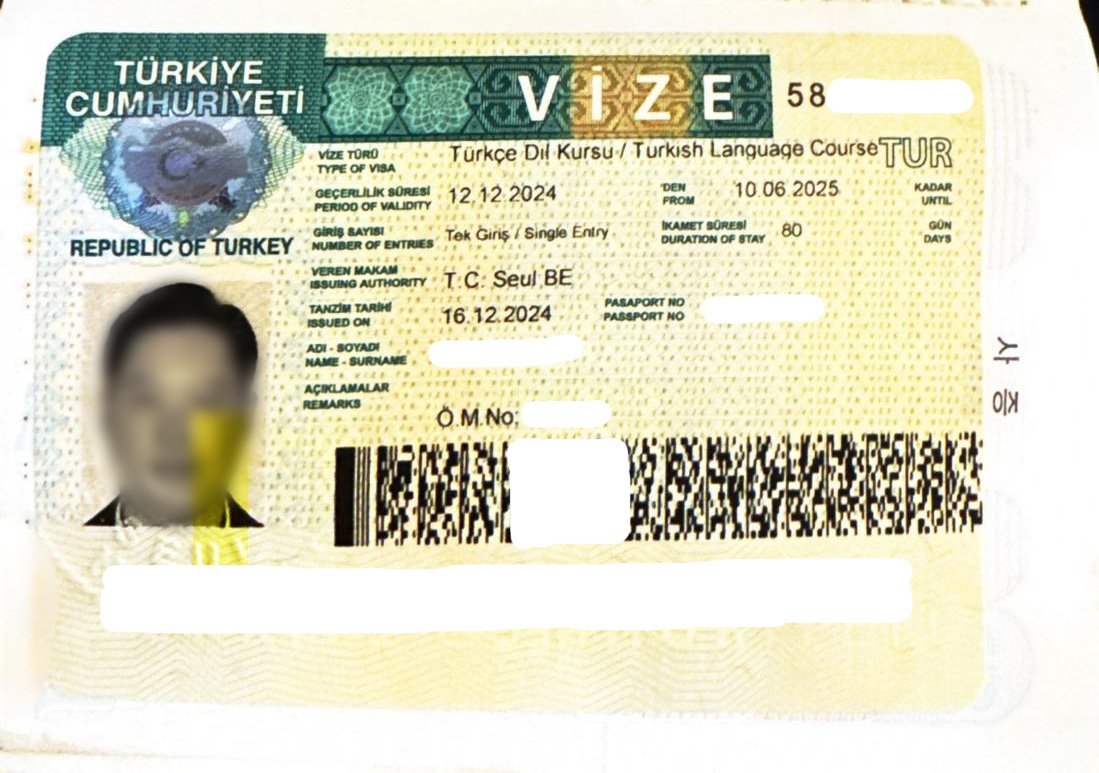
Turkish Language Course Visa of Our Students
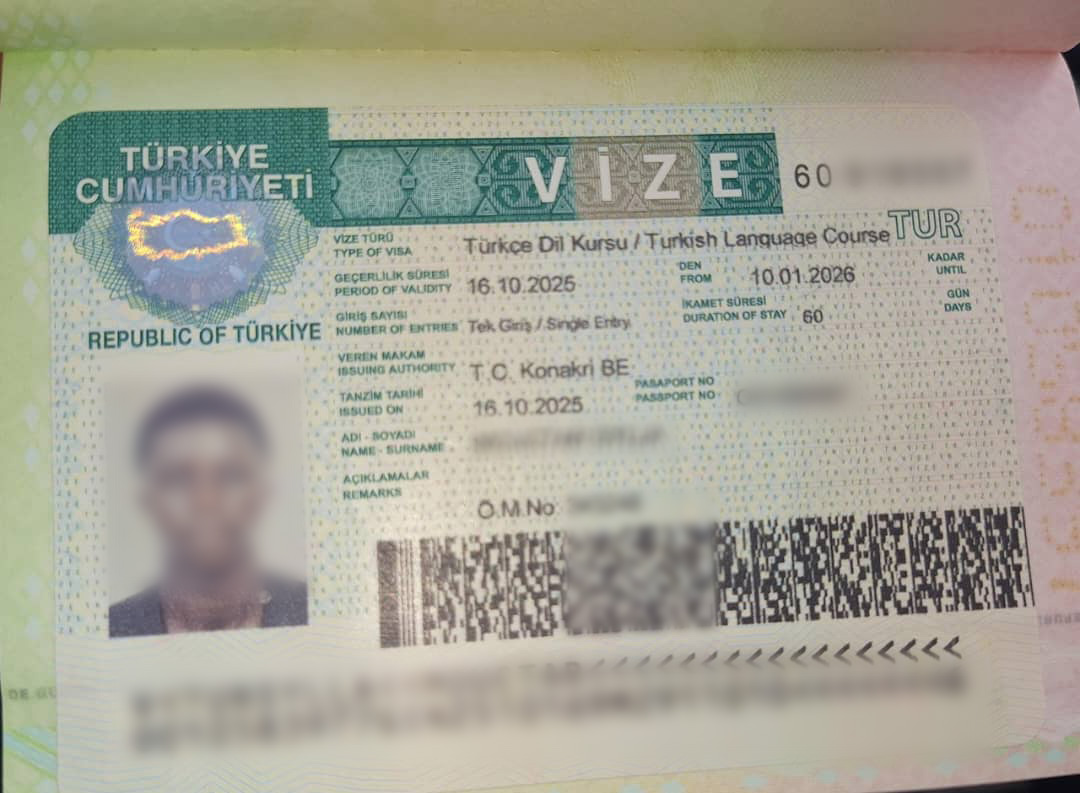
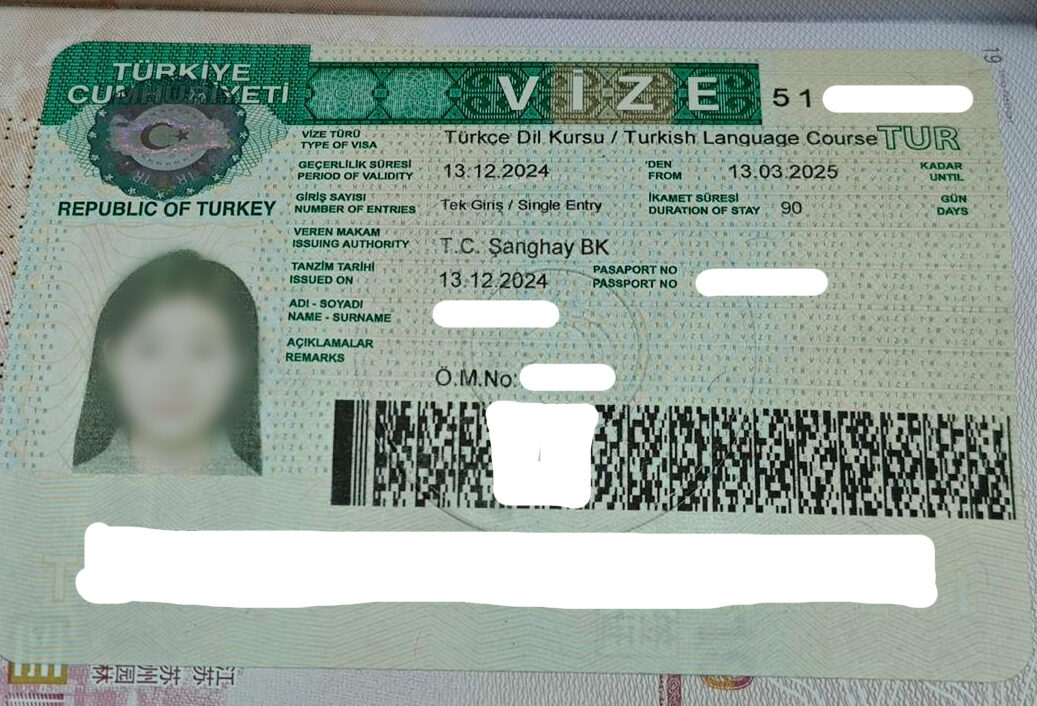
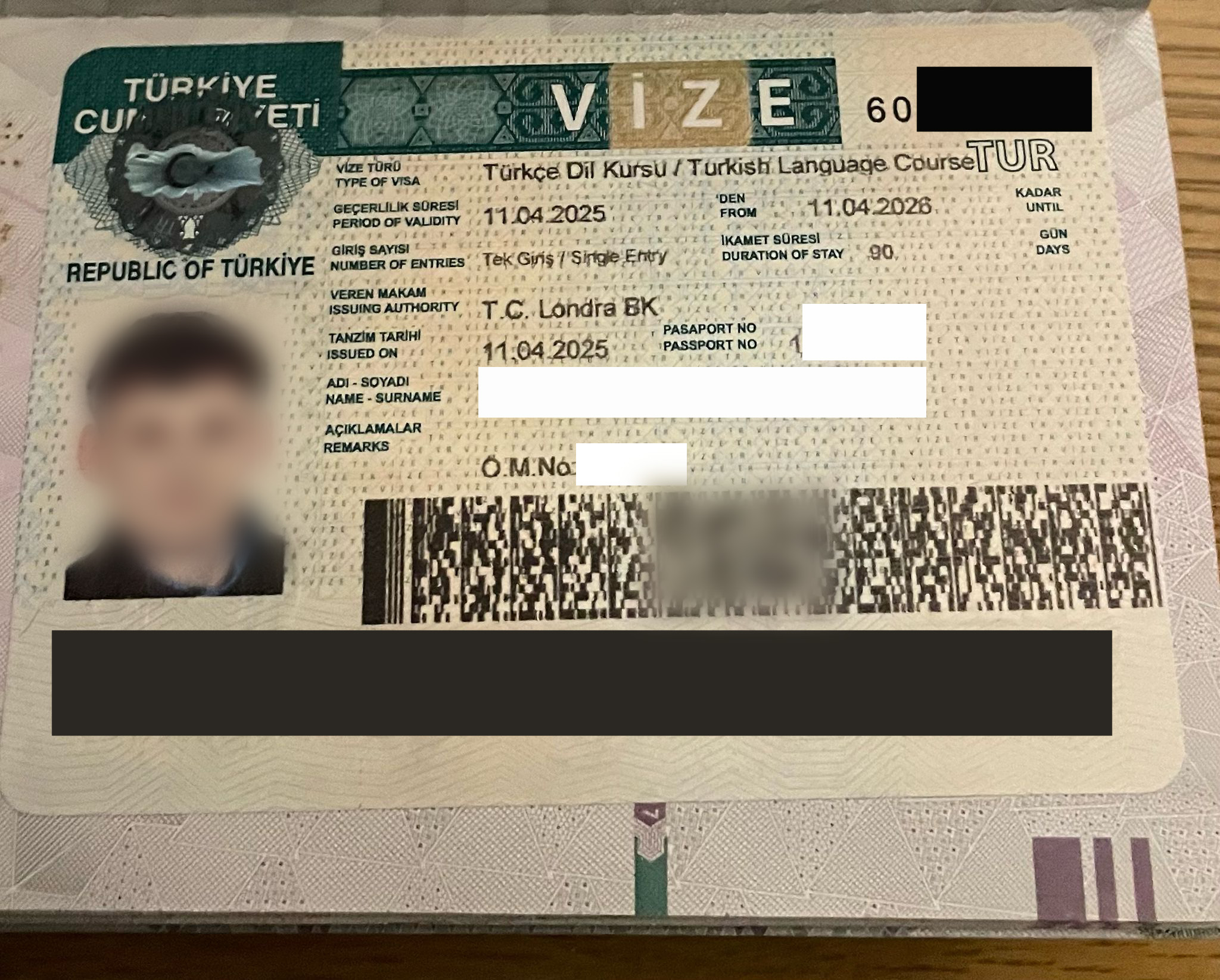
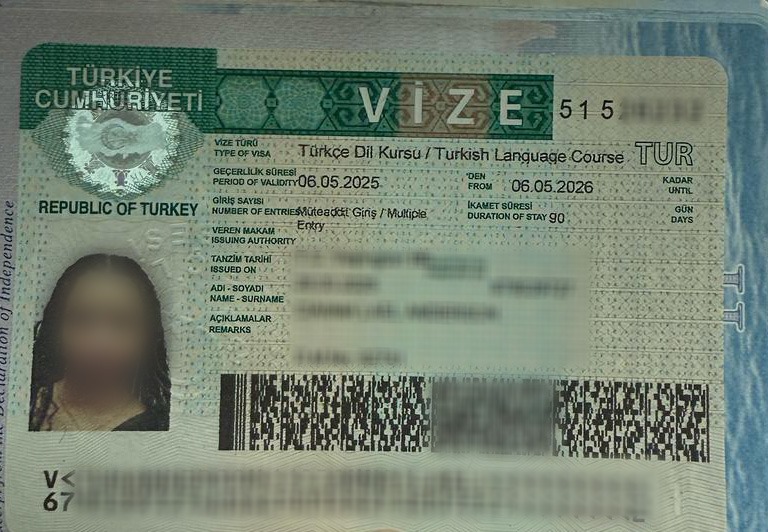
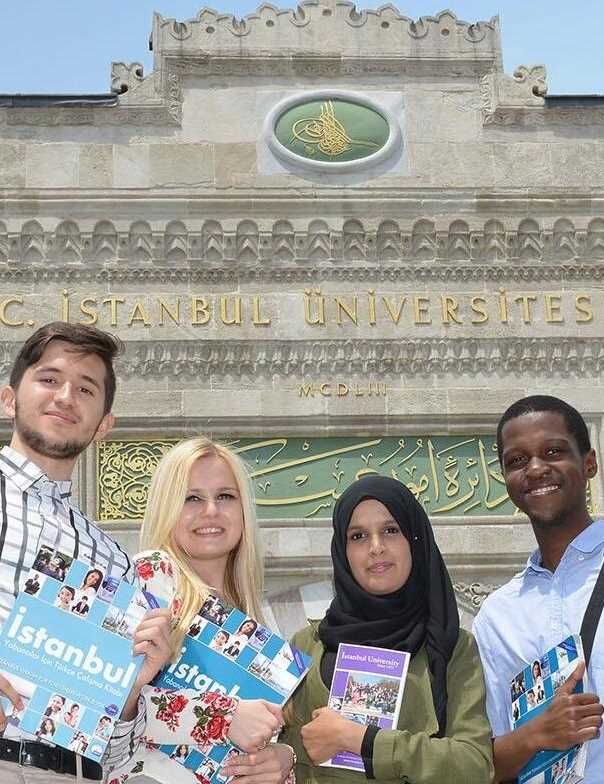
Country to make your greatest impact.
The economy of Turkey is booming and there are great opportunities for students who speak Turkish. Upgrade to a new life with Turkish Council.