Finding Student Accommodation in Istanbul: A Practical Guide for International Students
A practical guide to finding student accommodation in Istanbul, covering dormitories, private residences and rented apartments, the best districts,...
By Burak Ünal · · 10 min read
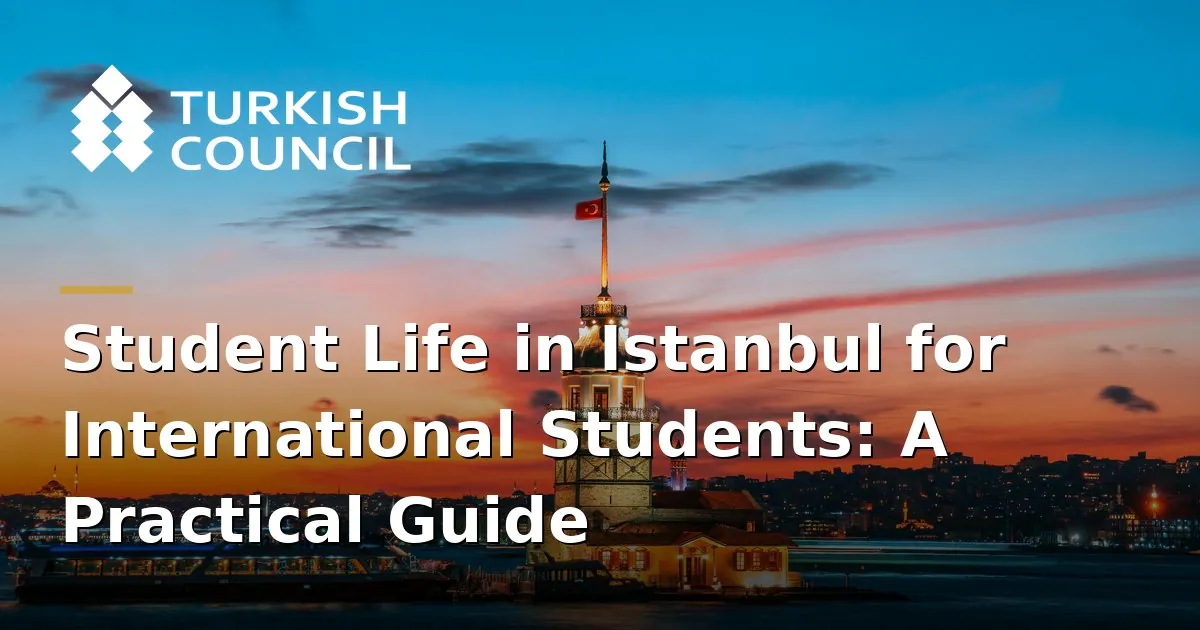
Student life in Istanbul for international students is busy, affordable by European standards, and shaped by a city that stretches across two continents. In practice it means finding a dormitory or a shared flat, learning a cheap and far-reaching public transport network, eating well on a modest budget, and joining a large community of students from more than 40 countries. This guide covers the everyday side of student life in Istanbul: where to live, what things cost, how to get around, and how to keep your paperwork in order while you study.
Istanbul is home to many of Turkey's best-known universities, from Istanbul University and Marmara University to Boğaziçi University and Istanbul Technical University (İTÜ), and it draws students from across Asia, Africa, the Middle East and Europe. As an education consultancy based in the Şişli district of Istanbul, Turkish Council guides international students through the move, and this article gives you a realistic picture of what to expect before you arrive.
International student life in Istanbul combines a big-city pace with a strong student culture and living costs that are usually lower than in Western Europe or North America. Most days revolve around campus, public transport, affordable meals and a wide social scene. Because the city is so large, your experience depends heavily on where your campus sits and where you choose to live.
Answering what is student life like in Istanbul honestly means acknowledging both sides. The city is energetic, historic and welcoming, and English is widely understood around universities. It is also spread out, so commutes can be long, and prices in central districts have risen. Once you settle into a routine, studying in Istanbul as an international student is manageable and, for most students, genuinely enjoyable.
Most international students in Istanbul live in a university dormitory, a state KYK dormitory, a private student residence, or a shared flat with other students. Your choice usually comes down to budget, how much privacy you want, and how close you need to be to campus. Arranging housing before you arrive, or booking short-term accommodation for your first weeks, saves stress.
University and private dormitories are the simplest option for a first year. They are furnished, often include meals or a kitchen, and place you among other students straight away. State dormitories run by the government's Credit and Dormitories Institution (KYK) are cheaper but harder to secure, while private dorms cost more and offer more comfort. In our experience advising international students, a dormitory for the first year is the easiest way to settle in before you commit to a longer flat lease.
Renting a shared flat gives you more independence and is popular from the second year onward. You split rent and bills with flatmates, which keeps the cost of living for students in Istanbul reasonable, especially outside the most central districts. Read any contract carefully and be cautious with deposits, since rental scams do occur.
A few areas stand out for students. Rents and character change over time, so treat this as a general guide as of the time this article is written.
The cost of student life in Istanbul depends mainly on your rent. Housing is the largest expense, followed by food, transport and phone or internet. Because prices and exchange rates move often, confirm current figures locally and treat any number here as a rough guide as of the time this article is written.
The cost of living for students in Istanbul typically breaks down like this:
Many international students work part-time, but student visa and residence permit conditions limit working, so check what is currently allowed before relying on any income. An education consultant can explain the current rules for your situation.
Istanbul has one of the largest public transport networks in the region, and a single card, the Istanbulkart, works on almost all of it. The Istanbulkart covers the metro, tram, metrobüs, city buses, ferries and the Marmaray line that runs under the Bosphorus between the two sides of the city.
As a student, you can apply for a discounted student Istanbulkart, which lowers the fare on every ride; you will need proof of enrolment to qualify. Ferries between the European and Asian sides are a highlight of studying in Istanbul as an international student, turning an ordinary commute into a short trip across the Bosphorus. Allow extra time during rush hours, when the metrobüs and main metro lines get crowded.
Food is central to international student life in Istanbul, and it is easy to eat well without spending much. University canteens offer subsidised meals, neighbourhood lokantas serve home-style Turkish dishes at fair prices, and street food such as simit, döner, balık ekmek and börek is cheap and filling. Most areas also have markets where fresh produce is inexpensive.
The social side of student life is one of the city's strengths. Universities run clubs and societies for sports, culture, language exchange and volunteering, and these are the fastest way to make friends when you arrive. Kadıköy and Beyoğlu are known for their cafes and live music, while historic Fatih offers museums within reach of campus. Because Istanbul hosts students from dozens of countries, you are likely to find a community from your own region.
Studying in Istanbul as an international student can be done in Turkish or, at many universities, entirely in English. Programs taught in English are common at larger and private universities, while Turkish-taught programs usually ask for a Turkish proficiency certificate such as the TÖMER. If your language level is not yet sufficient, many universities offer a one-year preparatory year (hazırlık) before your degree begins.
Academic culture varies by university and department, but attendance rules are often taken seriously, and you register for courses each term through your university's student system. The international student office on campus is your main point of contact for enrolment and documents. Learning some everyday Turkish, even in an English-taught program, makes daily life easier.
Every international student in Istanbul who stays beyond the length of their visa needs a student residence permit, which you apply for through the Directorate General of Migration Management, known in Turkish as Göç İdaresi. You arrive on a student visa obtained from a Turkish consulate in your home country, register at your university, and then apply for the residence permit that lets you stay lawfully for the duration of your studies. The permit is generally renewed each year.
In our experience advising international students, the most common paperwork problems come from leaving the residence permit application too late or arriving with missing documents, so start early and keep copies of everything. You will also need health insurance and a Turkish tax number, which your university office or an advisor can help arrange. Turkish Council guides students through the student visa and residence permit steps so nothing is missed.
Getting the most out of student life in Istanbul comes down to settling your basics early. Sort out your housing, your student Istanbulkart, your residence permit and your health insurance in the first few weeks. Once those are in place, you can focus on your studies and the city itself. Join a club, learn some everyday Turkish, explore both sides of the Bosphorus, and keep a sensible monthly budget.
Istanbul rewards students who stay organised. With early planning, international student life in Istanbul is not only manageable but genuinely worthwhile, giving you a historic city to explore and a large international community to join.
Turkish Council is an Istanbul-based education consultancy that has guided international students from over 40 countries through Turkish language course visas, student visas, residence permits and university admission since 2020. To discuss your own plans, reach us by phone or WhatsApp at +90 532 431 80 50, by email at contact@turkishcouncil.org, or visit us at Merkez Mahallesi Hasat Sokak No:12A, 34384 Şişli, İstanbul. Contact us for more information.
Student life in Istanbul for international students is energetic and affordable by European standards, centred on campus, cheap public transport, good food and a large multicultural student community. Your daily experience depends a lot on where you live and study, since the city is spread across two continents.
The cost of living for students in Istanbul depends mainly on housing, with food, transport and phone costs adding a smaller amount. A dormitory or shared flat, home cooking and a discounted student Istanbulkart keep it manageable. Prices change often, so confirm current figures locally.
Most international students live in a university or KYK dormitory, a private student residence, or a shared flat. Dormitories are the easiest choice for a first year, while shared flats in areas such as Kadıköy, Fatih or Avcılar suit students who want more independence later on.
No, you do not always need Turkish, because many universities in Istanbul offer programs taught entirely in English. Turkish-taught programs require a proficiency certificate such as the TÖMER, and learning everyday Turkish still makes daily life much easier.
Students get around Istanbul with the Istanbulkart, a single card that works on the metro, tram, metrobüs, buses, ferries and the Marmaray. A discounted student Istanbulkart lowers every fare, and ferries across the Bosphorus are one of the pleasures of studying in Istanbul as an international student.
Yes, if you stay beyond the length of your visa you need a student residence permit, applied for through the Directorate General of Migration Management (Göç İdaresi). You enter on a student visa, register at your university, then apply for the permit, which is usually renewed each year.
Turkish Council is an Istanbul-based (Şişli) education consultancy specialising in study-in-Turkey services for international students. Since 2020, our consultants have guided students from over 40 countries through Turkish language course visas, student visas and residence permits, and university admission, working in English, Turkish, French, Russian and Chinese. The firm is led by Burak Ünal, an education consultant who holds a BSc in Business Management from Boğaziçi University and an MSc in Finance from the London School of Economics, and is a Chevening Scholarship holder. We focus on clear, step-by-step guidance.
Disclaimer: This article is for general informational purposes only and you are strongly advised to consult a professional to evaluate your personal situation. No liability is accepted that may arise from the use of the information in this article.
Founder and Managing Director, Turkish Council
Burak Ünal founded Turkish Council in Istanbul in 2020 and advises international students and foreigners on Turkish language course visas, residence permits and university admission in Turkey. He has advised more than 100 students from more than 40 countries, in English, Turkish and French.
A practical guide to finding student accommodation in Istanbul, covering dormitories, private residences and rented apartments, the best districts,...
Scholarships for international students in Turkey can cover tuition, a stipend, housing, insurance and flights.
University admission in Turkey for international students explained: eligibility, documents, costs, timelines and a step-by-step guide to applying to...