Turkish Student Visa for Jordanian Students: 2026 Guide
The Turkish student visa for Jordanian students, explained step by step: documents, the embassy application process, timeline, costs and the...
By Burak Ünal · · 11 min read
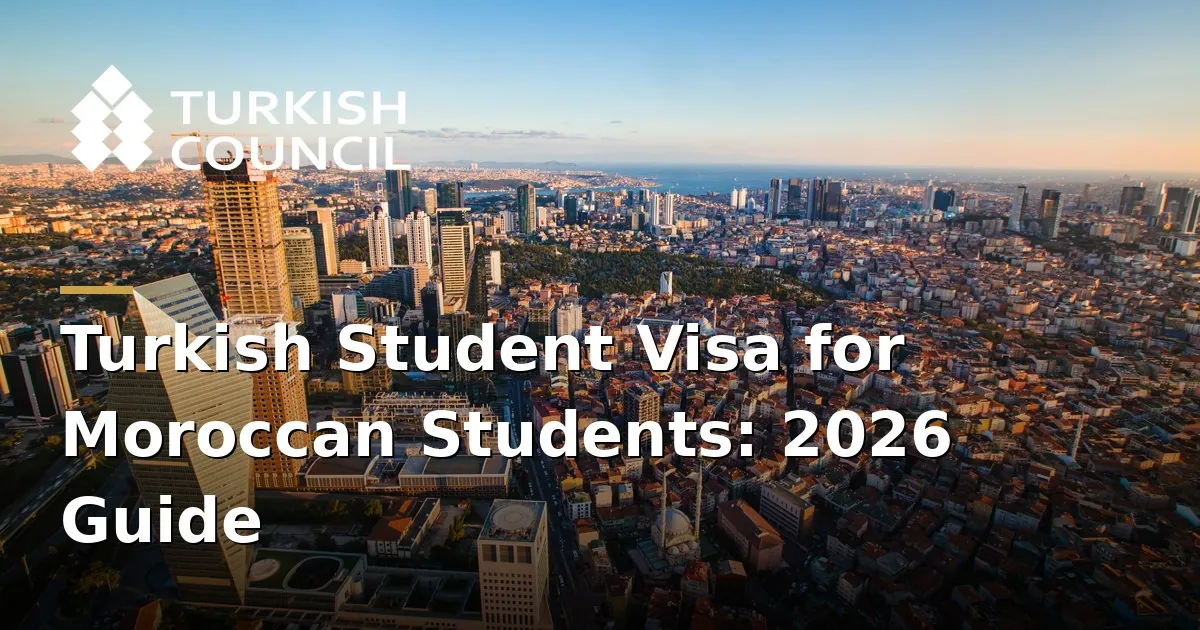
If you hold an offer from a Turkish university and you are applying from Morocco, you need a student visa before you travel. The short answer: secure your university acceptance, gather your documents, book an appointment at the Turkish consulate in Rabat or Casablanca, submit your application in person, and collect the visa stamped in your passport. This guide to the Turkish student visa for Moroccan students walks you through the whole path, from the acceptance letter to the residence permit you apply for once you arrive.
The Turkish student visa for Moroccan students is an entry visa that lets a Moroccan national travel to Turkey to study at a recognised institution. It is issued by a Turkish consulate in Morocco and is tied to a specific acceptance from a university or a registered course. You cannot enrol long term on a tourist entry. Moroccan passport holders should not rely on visa-free short stays for study, because study is a separate category with its own conditions.
In practice, the visa opens the door, and the residence permit you obtain inside Turkey keeps that door open for the length of your programme. Turkey has become a popular destination for Moroccan students, thanks to its universities, its scholarship options, and the cultural closeness many Moroccan families feel with Turkey. Understanding the Turkey student visa for Moroccans, and how it differs from a language course visa, saves you weeks of avoidable delay.
Any Moroccan student who plans to study a full academic programme in Turkey needs a student visa before travelling. This includes bachelor's, master's and doctoral students, and students joining a preparatory year. The rule is simple: if your stay is for study and runs beyond a short visit, you apply for the student visa from Morocco first.
Even students who receive a Türkiye Bursları (Türkiye Scholarships) award go through a consulate to convert that award into an entry visa. The Turkish student visa requirements for Moroccan students are broadly the same whether you are self-funded or scholarship-funded, though scholarship holders usually receive a placement letter that simplifies the paperwork.
The core document set for the Turkish student visa for Moroccan students is consistent, though a consulate can request extras case by case. As of the time this article is written, prepare the following, and confirm the current list with the consulate or an advisor before you book, because these requirements change often:
Documents issued in Morocco, such as your diploma and transcripts, may need to be translated and, in some cases, legalised or apostilled. In our experience advising international students, the most common reason a student visa is delayed is a missing or incorrect acceptance letter, so check that the name on your letter matches your passport exactly before your appointment.
You apply for a Turkish student visa by working through an ordered sequence rather than tackling one large task. Learning how to apply for a Turkish student visa is easier when you break it into clear stages, and the application process for Moroccan students usually follows these steps:
Following the Turkish student visa application process in this order keeps the paperwork manageable and reduces the chance that one missing item stalls the whole file.
The student visa and the language course visa serve different purposes, and Moroccan students sometimes confuse them. The student visa is for enrolment in a degree programme. The language course visa is for foreigners who come to study Turkish on a registered course, often before starting a degree. Here are the practical differences, as of the time this article is written; confirm current details with an advisor, because rules change often:
Many Moroccan students take a language course first to reach the Turkish level their programme needs, then move into a degree. If that is your plan, you may start on a language course visa and transition later. An advisor can map the right sequence for your situation.
The Turkish student visa for Moroccan students usually takes several weeks from appointment to approval, though the exact time varies by consulate and season. As a rough guide, and as of the time this article is written, allow around four to eight weeks between submitting your file and receiving your visa, and longer during the busy pre-semester months.
Add time before that for gathering documents and arranging translations. The safest approach is to begin as soon as you hold your acceptance letter. Students who leave the application to the last weeks before term often find that appointment slots are gone. Confirm current processing times with the consulate, because they shift with demand.
The Turkish student visa requirements for Moroccan students come with several costs, and it helps to budget for all of them, not only the visa fee itself. As of the time this article is written, plan for the following, and confirm current amounts with the consulate or an advisor:
Scholarship students may have some of these covered, but self-funded students should budget carefully. Keep receipts and copies of every payment, because you may need them at the residence permit stage.
The student visa gets you into Turkey; the student residence permit lets you stay for the length of your studies. Once you arrive, you enrol at your institution and apply for the residence permit through the Directorate General of Migration Management (Göç İdaresi), usually via the e-ikamet online system, within the period stamped on your visa.
You will typically need your passport, your visa, your student certificate from the university, biometric photographs, proof of address, and valid health insurance. Do not let your entry visa lapse before you file, because a gap can complicate your status. For most Moroccan students, this two-step design, visa first and then residence permit, is the standard path to living and studying in Turkey legally.
A few avoidable errors cause most of the delays we see:
Treating the Turkey student visa for Moroccans as a project you start early, with a clear checklist, prevents nearly all of these problems.
The Turkish student visa for Moroccan students is a manageable process when you take it step by step: get your acceptance, prepare and translate your documents, book your consulate appointment in Rabat or Casablanca early, apply in person, and complete your student residence permit after you arrive. Knowing how to apply for a Turkish student visa turns a stressful application into an orderly checklist. Give yourself time, confirm the current rules, and lean on experienced guidance where it helps.
Turkish Council is an Istanbul-based education consultancy that has guided international students from over 40 countries through Turkish language course visas, student visas, residence permits and university admission since 2020. To discuss your own plans, reach us by phone or WhatsApp at +90 532 431 80 50, by email at contact@turkishcouncil.org, or visit us at Merkez Mahallesi Hasat Sokak No:12A, 34384 Şişli, İstanbul. Contact us for more information.
Yes, Moroccan students need a student visa to study a full programme in Turkey. Although Moroccan passport holders may enter Turkey for short visits under certain conditions, study is a separate category, and you must obtain the student visa from a Turkish consulate in Morocco before you travel for your studies.
The Turkish student visa for Moroccan students usually takes around four to eight weeks from your consulate appointment to approval, as of the time this article is written. It can take longer during the busy months before the academic year, so begin as soon as you have your acceptance letter and confirm current times with the consulate.
You typically need a valid passport, your university acceptance letter, a completed visa form, biometric photos, proof of accommodation, proof of funds, health insurance and the visa fee receipt. Documents issued in Morocco may need certified translation and legalisation, so check the current list before your appointment.
You apply by first securing your university acceptance, then preparing your documents, booking an appointment at the Turkish consulate in Rabat or Casablanca, and submitting your file in person. After approval, you collect your passport with the visa and travel to Turkey to begin your studies.
Work rights for students in Turkey are limited and depend on your level of study and current regulations. Undergraduate students face tighter restrictions than postgraduate students. Because these rules change, confirm your specific situation with your university and an advisor before making any work plans.
A student visa is for enrolling in a degree programme, while a language course visa is for studying Turkish on a registered course. Many Moroccan students take a language course first, then move into a degree. An advisor can help you choose the right visa for your plan.
After you arrive, you enrol at your institution and apply for a student residence permit through the Directorate General of Migration Management (Göç İdaresi), usually via the e-ikamet system, within the period allowed by your visa. The residence permit lets you stay for the length of your studies.
Turkish Council is an Istanbul-based (Şişli) education consultancy specialising in study-in-Turkey services for international students. Since 2020, our consultants have guided students from over 40 countries through Turkish language course visas, student visas and residence permits, and university admission, working in English, Turkish, French, Russian and Chinese. The firm is led by Burak Ünal, an education consultant who holds a BSc in Business Management from Boğaziçi University and an MSc in Finance from the London School of Economics, and is a Chevening Scholarship holder. We focus on clear, step-by-step guidance.
Disclaimer: This article is for general informational purposes only and you are strongly advised to consult a professional to evaluate your personal situation. No liability is accepted that may arise from the use of the information in this article.
Founder and Managing Director, Turkish Council
Burak Ünal founded Turkish Council in Istanbul in 2020 and advises international students and foreigners on Turkish language course visas, residence permits and university admission in Turkey. He has advised more than 100 students from more than 40 countries, in English, Turkish and French.
The Turkish student visa for Jordanian students, explained step by step: documents, the embassy application process, timeline, costs and the...
Notarized documents student visa guide for Turkey: which papers need sworn translation and noter certification, plus the step-by-step process,...
Apostille Turkey student visa guide: learn which documents need an apostille, how legalisation and translation work, and the timeline and costs to...