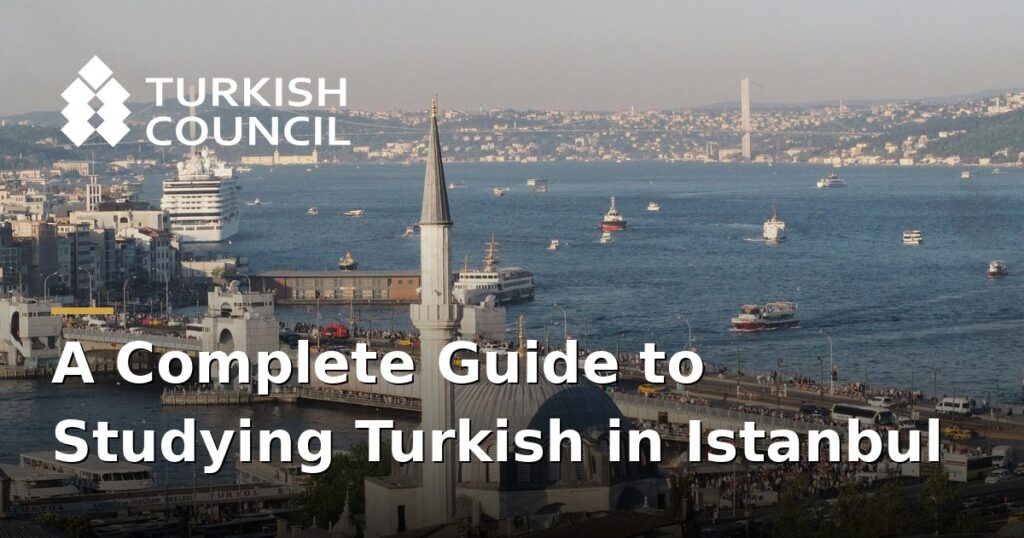
Studying Turkish in Istanbul means enrolling in a registered language course in the city, choosing your level, and, for most foreigners, arranging a Turkish language course visa or residence permit so you can stay legally while you learn. The short answer is that you pick an accredited course, secure an invitation letter, apply for the right permission to stay, and attend classes that usually run from beginner (A1) to advanced (C1). This guide walks you through courses, costs, visas and daily life so you know what to expect before you arrive.
Istanbul is the most popular place in the country to learn the language, and for good reason. You are surrounded by Turkish every day, from the ferry queue to the corner bakery, which turns your coursework into constant real practice.
What Does Studying Turkish in Istanbul Involve?
Studying Turkish in Istanbul involves three main parts: choosing an accredited language school, deciding on your legal basis to stay, and committing to a level-based curriculum that follows the Common European Framework (A1 to C1). Most schools group learners by ability, so you sit an initial placement test and then move up as you pass each level. A full pathway from complete beginner to a confident intermediate level often takes several months of steady study, though this varies with how many hours a week you attend.
Many students combine a course with a longer plan, such as university admission in Turkey, where a Turkish proficiency certificate can support an application. Others simply want to live, work or retire in the country and prefer to learn the local language properly. Whatever your reason, the practical steps are similar.
Why Learn Turkish in Istanbul?
Istanbul offers the widest choice of accredited schools, the most frequent course start dates, and constant daily exposure to the language, which is why many foreigners choose to learn Turkish in Istanbul rather than a smaller city. When you learn Turkish in Istanbul you practise outside the classroom without trying, because you hear the language in shops, on public transport and in cafes all day.
The city also has a large international community, so you will find classmates from many countries at a similar level to you. That mix helps you speak Turkish as your common language rather than falling back on English. In our experience advising international students, the ones who progress fastest are those who treat everyday errands as speaking practice from their very first week.
Turkish Language Courses in Istanbul: Types and Levels
Turkish language courses in Istanbul come in several formats to suit different schedules and budgets. Understanding the options helps you pick the right one before you commit.
Intensive courses
Intensive programmes are the most common choice for people who want a language course visa or residence permit. They typically run for around twenty hours a week and move quickly through each level. Because attendance is tracked, these courses are usually the ones that qualify you for a Turkish language course visa in Istanbul.
Part-time and evening courses
Part-time Turkish language courses in Istanbul suit people who already live in the city, work, or study something else. They cover the same material at a slower pace, often a few evenings a week. They may not always meet the attendance rules for a course-based residence permit, so confirm this with the school and an advisor first.
Private and online lessons
One-to-one lessons let you set the pace and focus on your weak points, such as speaking or grammar. Many schools blend private sessions with group classes. Online options exist too, though they generally do not support a language course visa, since that permission is tied to in-person, attendance-based study.
The Turkish Language Course Visa in Istanbul
A Turkish language course visa in Istanbul is the entry visa a foreigner obtains to come to Turkey specifically to study Turkish on a registered, in-person course. You apply for it at a Turkish consulate or embassy in your home country, using an official invitation letter from the language school as your core supporting document. Once you arrive, if your course runs longer than your visa allows, you then apply for a Turkish language course residence permit to extend your legal stay.
The Directorate General of Migration Management (Göç İdaresi) handles residence permits inside Turkey, while consulates handle the initial visa. As of the time this article is written, applicants are usually asked for an enrolment or invitation letter, proof of accommodation, valid health insurance, proof of sufficient funds, and a passport valid for the full period. Because student visa and residence permit rules change often, confirm the current, exact list with an advisor before you apply.
How to Study Turkish in Istanbul, Step by Step
If you are wondering how to study Turkish in Istanbul from abroad, the process follows a clear sequence. Knowing how to study Turkish in Istanbul in advance saves you from booking flights before your paperwork is ready.
- Choose an accredited school. Confirm the course is registered and can issue an official invitation letter for visa purposes.
- Enrol and pay the course fee. The school then issues your invitation or enrolment letter naming your level and course dates.
- Apply for the visa. Book an appointment at your nearest Turkish consulate and submit the language course visa application with your supporting documents.
- Travel to Istanbul. Enter on your course visa and register with the school.
- Apply for a residence permit if needed. If your studies run longer than the visa, apply to the Directorate General of Migration Management for a Turkish language course residence permit.
- Attend and progress. Keep your attendance high, since it is checked and it also supports any later permit renewal.
Turkish Language Course Visa vs Student Visa
People often confuse the two routes, so here are the main differences. A language course visa is for learning Turkish; a student visa is for enrolling in a degree at a university.
The Turkish language course visa:
- Purpose: studying Turkish on a registered course
- Invitation issued by an accredited language school
- Length tied to the course duration
- Leads to a Turkish language course residence permit
- Best for language learners
The Turkish student visa:
- Purpose: enrolling in a university degree programme
- Invitation issued by a university
- Length tied to the academic programme
- Leads to a Turkish student residence permit
- Best for degree-seeking students
Some students start on a language course visa, reach the required level, and then move on to university admission in Turkey and a student visa. An advisor can help you sequence the two so there is no gap in your legal status.
Costs and Timelines for Studying Turkish in Istanbul
The cost of studying Turkish in Istanbul depends on the school, the course intensity and how many levels you take. Course fees, health insurance, government charges and living costs are the main items to budget for. As of the time this article is written, an intensive full-level course commonly falls within a moderate range that varies widely between schools, so ask each one for a written quote. Insurance and permit charges are separate and also change periodically.
On timing, allow enough lead time. Gathering documents and booking a consulate appointment can take a few weeks, and the visa decision itself usually adds more time on top. In our experience advising international students, the most common cause of delay is a missing or incorrect invitation letter, so check that document carefully before you submit. Because fees and processing times change often, confirm current figures with your school and an advisor rather than relying on older articles.
What to budget for
- Course fees, quoted per level or per term
- Health insurance valid in Turkey
- Visa and residence permit government charges
- Accommodation, transport and daily living costs in Istanbul
Daily Life as a Turkish Language Student in Istanbul
Life as a language student in Istanbul is affordable compared with many European cities and rich in free practice. Neighbourhoods such as Kadikoy, Besiktas and Sisli are popular with students for their transport links and social life. You can practise every day: order in Turkish, ask for directions, and read signs and menus. This constant exposure is the real reason many people choose to learn Turkish in Istanbul instead of studying at home.
Set small routines. Attend every class, keep a vocabulary notebook, and speak even when you make mistakes. Studying Turkish in Istanbul rewards consistency more than talent, and steady daily effort will carry you from beginner to a confident conversational level.
Studying Turkish in Istanbul follows a clear, well-trodden path: pick an accredited course, arrange the right visa or residence permit, and use the city itself as your classroom. Plan the paperwork early, budget realistically, and confirm the current rules with an advisor. Handled in that order, your months of study in Istanbul can set you up for university, work or a new life in Turkey.
Planning to Study in Turkey?
Turkish Council is an Istanbul-based education consultancy that has guided international students from over 40 countries through Turkish language course visas, student visas, residence permits and university admission since 2020. To discuss your own plans, reach us by phone or WhatsApp at +90 532 431 80 50, by email at [email protected], or visit us at Merkez Mahallesi Hasat Sokak No:12A, 34384 Şişli, İstanbul. Contact us for more information.
Frequently Asked Questions
How do I start studying Turkish in Istanbul as a foreigner?
Start studying Turkish in Istanbul by choosing an accredited language school, enrolling to receive an official invitation letter, and applying for a Turkish language course visa at your nearest Turkish consulate. Once in the city, extend your stay with a residence permit if your course runs long.
Do I need a visa to learn Turkish in Istanbul?
Most foreigners need a Turkish language course visa to learn Turkish in Istanbul on a registered, in-person course. You apply at a Turkish consulate using the school’s invitation letter, then apply for a residence permit inside Turkey if your studies continue beyond the visa period.
How long does it take to learn Turkish?
It usually takes several months of steady, level-based study to move from beginner to a confident intermediate level. The exact time depends on your course intensity and how much you practise, and intensive Turkish language courses in Istanbul move faster than part-time ones.
How much does a Turkish language course in Istanbul cost?
Costs vary widely by school and course intensity, and include course fees, health insurance and government charges. Because prices change periodically, ask each school for a written quote and confirm current figures with an advisor rather than relying on older estimates.
What is a Turkish language course visa in Istanbul?
A Turkish language course visa in Istanbul is the entry visa you obtain to come to Turkey specifically to study Turkish on a registered course. It is based on an invitation letter from an accredited school and is different from a university student visa.
Can I go to a Turkish university after a language course?
Yes. Many students use a language course to reach the required Turkish level, then apply for university admission in Turkey and switch to a student visa. An advisor can help you plan the change so there is no gap in your legal status.
Is Istanbul a good place to learn Turkish?
Istanbul is one of the best places to learn Turkish because it has the most accredited schools, frequent start dates and constant daily exposure to the language. Living in the city turns everyday errands into speaking practice from your first week.
About Turkish Council
Turkish Council is an Istanbul-based (Şişli) education consultancy specialising in study-in-Turkey services for international students. Since 2020, our consultants have guided students from over 40 countries through Turkish language course visas, student visas and residence permits, and university admission, working in English, Turkish, French, Russian and Chinese. The firm is led by Burak Unal, an education consultant who holds a BSc in Business Management from Boğaziçi University and an MSc in Finance from the London School of Economics, and is a Chevening Scholarship holder. We focus on clear, step-by-step guidance.
Disclaimer: This article is for general informational purposes only and you are strongly advised to consult a professional to evaluate your personal situation. No liability is accepted that may arise from the use of the information in this article.