Learn Turkish in Istanbul: Schools, Classes, Prices and Visa Options
Learn Turkish in Istanbul with confidence: compare schools, class types, prices per level, and the course visa and residence permit options for...
By Burak Ünal · · 11 min read
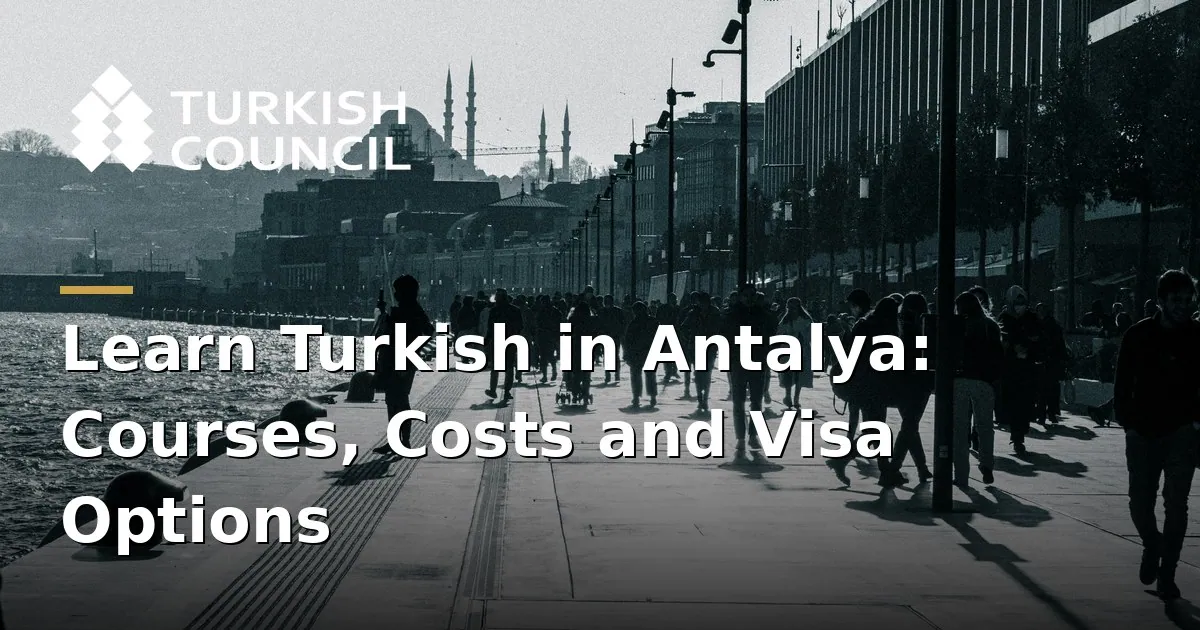
If you want to learn Turkish in Antalya, the practical answer is this: you enrol on a registered language course, typically two days a week across a year, and the right route for most foreigners is the Turkish language course visa rather than a tourist stamp. Antalya pairs a relaxed Mediterranean lifestyle with living costs that sit below Istanbul, which makes it a sensible base for a year of study. This guide from Turkish Council, an Istanbul-based education and immigration consultancy, walks you through the courses, the costs, and the visa and residence permit options, step by step.
Choosing to learn Turkish in Antalya gives you a full-immersion setting on Turkey’s southern coast, where daily life happens in Turkish and the pace is calmer than in the big northern cities. You practise the language in markets, cafes and government offices, not only in the classroom, and that constant exposure is one of the fastest ways to move from textbook phrases to real conversation.
The city is also used to international residents. A large community of foreign students, retirees and remote workers means local institutions are familiar with the paperwork that comes with a year abroad, from residence permit appointments to bank accounts. Rents, food and transport generally cost less than in Istanbul, so a study budget stretches further. For many people the combination of climate, cost and an unhurried routine is exactly what makes a full year of language study realistic rather than a plan that stalls after a few weeks.
Turkish language courses in Antalya follow the standard European framework, running from A1 for complete beginners up to C2 for near-native command. A typical programme that supports a course visa runs two days a week, three hours a day, over one year, and can be extended by a further year if you want to reach a higher level. That structure is designed to fit alongside work, family or other study, rather than demand full-time attendance.
Classes are usually small and taught in Turkish from the start, with grammar, speaking, listening and writing covered in each level. Because Turkish Council does not run a school and does not teach, we enrol you with a licensed partner language school in the city, and the partner school’s teachers deliver the lessons and set your level with a placement check. In our experience advising international students, learners who commit to the full two-day rhythm and use the language outside class progress noticeably faster than those who treat it as an occasional extra. Turkish language courses in Antalya also give you a registered enrolment, which is the document trail the authorities expect to see behind a language course visa.
The cost to learn Turkish in Antalya through Turkish Council is $1,430 in total, as of the time this article is written. That figure splits into two parts. The official invitation letter and visa support are $300 and non-refundable. The residence permit and education programme in Turkey are $1,130, and that amount covers the course tuition, health insurance, and the residence permit and residence card fees.
Some costs sit outside that package. Flights, accommodation, the consulate visa fee and your personal living expenses are not included, so build them into your own budget. Health insurance is part of the paid programme fee, so it is not free. Prices can move and the rules behind them change often, so treat these figures as a guide and confirm the current amounts with an advisor before you commit. The full cost is usually the first thing students want confirmed, so plan the whole budget, not just the package, from the start.
The main visa to learn Turkish on a registered course is the Turkish language course visa, which is different from the student visa used for a university degree. The language course visa lets a foreigner enter and stay in Turkey to study Turkish on a registered course, while the student visa is tied to admission to a Turkish university. A Turkish language course visa for Antalya is applied for at a Turkish consulate in your home country, using an invitation letter from the language school that enrolled you.
| Feature | Turkish Language Course Visa | Turkish Student Visa |
|---|---|---|
| Purpose | Study Turkish on a registered language course | Enrol in a degree at a Turkish university |
| Who it suits | Foreigners taking a language course in Antalya | Students admitted to a university programme |
| Document that triggers it | Invitation letter from the language school | Acceptance letter from the university |
| Where you apply | Turkish consulate in your home country | Turkish consulate in your home country |
| Leads to | Residence permit for language students | Turkish student residence permit |
Both visas are applied for before you travel, at a Turkish consulate or embassy, and both lead to a residence permit once you are inside Turkey. If your goal is a year of language study, a Turkish language course visa for Antalya is almost always the correct route. The final decision on any visa rests solely with the Turkish authorities.
A residence permit is what lets you remain in Antalya once your entry visa period ends. For language students it is a short-term residence permit tied to your enrolment, and in the Turkish Council package the permit and residence card fees are already included in the $1,130 education programme fee. You apply after you arrive, through the Directorate General of Migration Management (Göç İdaresi), and the permit is normally issued for the course period, with renewal possible if you extend your studies.
The paperwork usually includes your passport, proof of address in Antalya, valid health insurance, biometric photographs and your course enrolment documents. In our experience advising international students, the most common cause of a delay is a mismatch between the address on the application and the tenancy or host documents, so getting those consistent before the appointment saves weeks. Residence permit rules change often, so confirm the current document list with an advisor close to your application date.
The process of how to learn Turkish in Antalya follows a clear sequence, and taking the steps in order keeps your file consistent from the start. Here is the usual path:
Understanding how to learn Turkish in Antalya this way, as a document trail rather than a single application, is what keeps the visa, the permit and the enrolment lined up. Each stage produces the paperwork the next stage needs.
Good Turkish classes in Antalya for foreigners share a few features worth checking before you enrol. The school should be officially registered, because only a registered course can support an invitation letter and a language course visa. Ask about placement testing, class size, the weekly schedule and whether the level you finish on is certified, since a recognised certificate is useful for university admission or work later.
Think about location and routine too. A course near where you live makes the twice-weekly commitment easier to keep over a full year. When we arrange Turkish classes in Antalya for foreigners, we match students to a partner school by level, schedule and neighbourhood, then stay reachable while the visa and residence permit run their course. The aim is a setup you can actually sustain, because consistency over a year is what turns a beginner into a confident speaker.
For most foreigners, the decision to learn Turkish in Antalya comes down to three things: a registered course, a clear visa route, and a budget you have planned in full. Get those lined up and a year of study in the city is a realistic, well-supported plan rather than a leap in the dark.
Turkish Council is an Istanbul-based education consultancy that has guided international students from over 40 countries through Turkish language course visas, student visas, residence permits and university admission since 2020. To discuss your own plans, reach us by phone or WhatsApp at +90 532 431 80 50, by email at contact@turkishcouncil.org, or visit us at Merkez Mahallesi Hasat Sokak No:12A, 34384 Şişli, İstanbul. Contact us for more information.
The total cost to learn Turkish in Antalya through Turkish Council is $1,430 as of the time this article is written. That is $300 for the non-refundable invitation letter and visa support, plus $1,130 for the residence permit and education programme, which includes tuition, health insurance and the residence permit and card fees. Flights, accommodation and consulate fees are separate.
A standard course runs two days a week, three hours a day, over one year, and can be extended by a further year. How far you get depends on your starting level and how much you practise outside class, but a year of steady study usually moves a beginner up several levels on the A1 to C2 scale.
Yes, most foreigners need a Turkish language course visa for Antalya to study on a registered course. You apply for it at a Turkish consulate in your home country using an invitation letter from the language school, then convert your stay into a residence permit after you arrive.
Yes, courses start at A1 for people with no Turkish at all. The partner school runs a short placement check and places you at the right level, so beginners and more advanced learners each start where they should.
Generally yes, rents, food and transport in Antalya tend to cost less than in Istanbul, so a study budget usually stretches further. Actual costs vary by neighbourhood and season, so plan your own living expenses on top of the course package.
No, Turkish Council does not run a school and does not teach. We are an education and immigration consultancy: we enrol you on courses at our partner schools, which are licensed language schools whose teachers deliver the lessons, and we handle the visa, invitation letter and residence permit guidance around that.
Start by speaking to an advisor who confirms your level and budget, then we register you on a course at a partner school and request your invitation letter. From there you apply for the course visa, travel to Antalya and apply for your residence permit once you arrive.
Turkish Council is an education and immigration consultancy based in Şişli, Istanbul, that helps international students with Turkish language course visas, student visas, residence permits and university admission. Founded in 2020, we have advised more than 100 students so far, from more than 40 countries, and we work with local partners in many countries, in English, Turkish, French, Russian and Chinese. Turkish Council does not run a language school: we enrol students with licensed partner language schools, whose teachers deliver the courses. The firm was founded and is led by Burak Ünal, Founder and Managing Director, an experienced education consultant who holds a BSc in Business Management from Boğaziçi University and an MSc in Finance from the London School of Economics, and is a Chevening Scholarship holder. Visa and residence permit decisions are made solely by the Turkish authorities.
Disclaimer: This article is for general informational purposes only and you are strongly advised to consult a professional to evaluate your personal situation. No liability is accepted that may arise from the use of the information in this article.
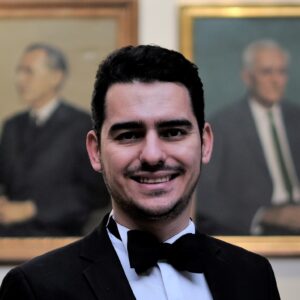
Founder and Managing Director, Turkish Council
Burak Ünal founded Turkish Council in Istanbul in 2020 and advises international students and foreigners on Turkish language course visas, residence permits and university admission in Turkey. He has advised more than 100 students from more than 40 countries, in English, Turkish and French.
Learn Turkish in Istanbul with confidence: compare schools, class types, prices per level, and the course visa and residence permit options for...
The Turkish language course visa for Somali students, explained step by step: the documents, the application process, timeline, costs and the...
Turkish student visa Uzbekistan guide for Uzbek language course students: documents, costs, timeline and step-by-step application for studying in...